
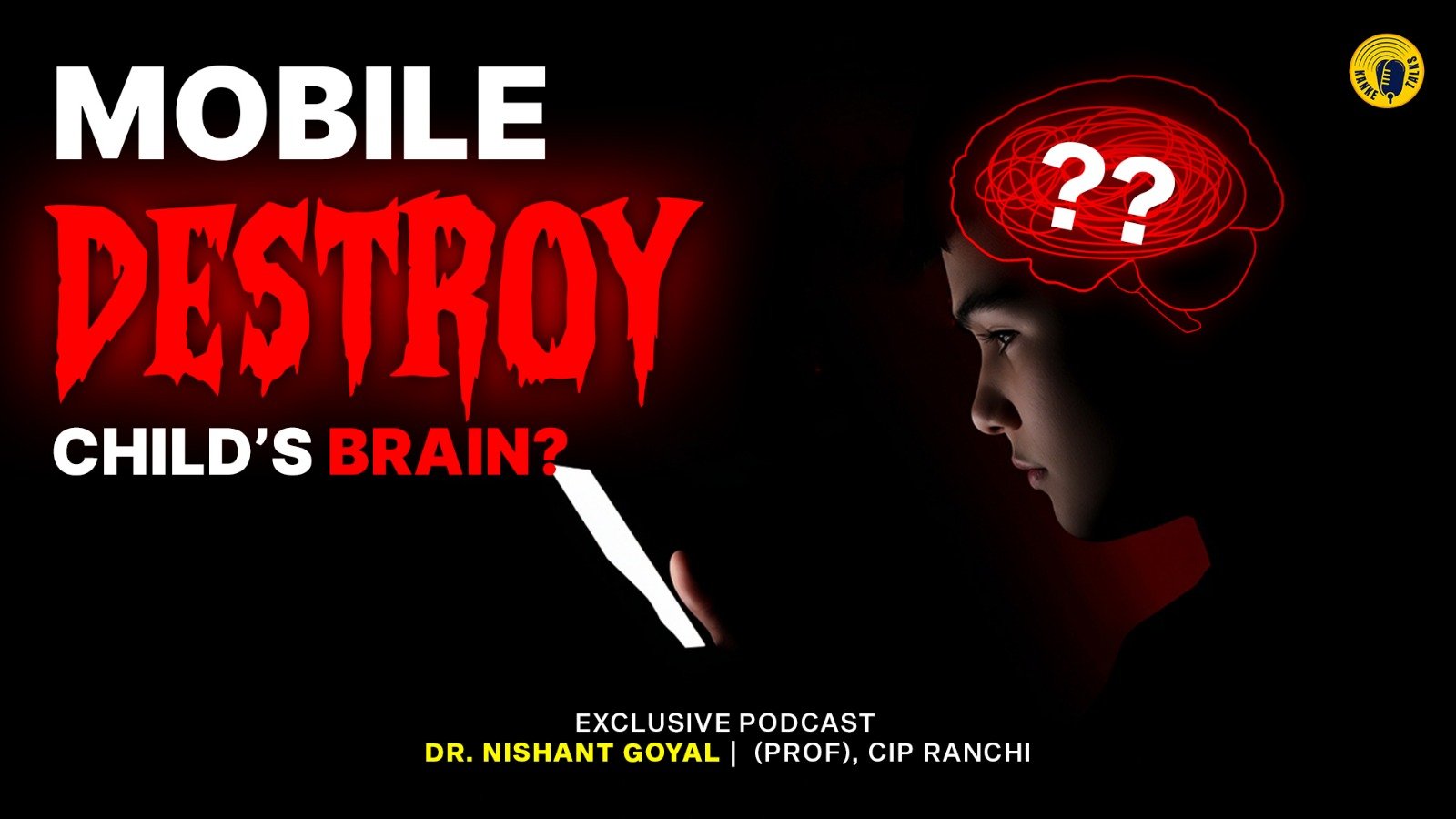
In today’s digital era, smartphones, tablets, and screens have become an inseparable part of childhood. From feeding babies to calming toddlers, screens are increasingly used as digital babysitters. But what if this convenience is silently reshaping children’s brains?
In a powerful episode of Kanke Talks, renowned psychiatrist Dr. Nishant Goyal from the Central Institute of Psychiatry (CIP), Ranchi, exposes the alarming truth behind “Virtual Autism”—a growing phenomenon where excessive screen exposure mimics autism-like symptoms in young children. This article breaks down everything parents, educators, and caregivers must know about virtual autism, its symptoms, causes, dangers, and prevention strategies
What Is Virtual Autism?
The term “Virtual Autism” has become popular on social media and parenting forums. However, Dr. Nishant Goyal clarifies that virtual autism is not a clinical medical diagnosis. Instead, it is a term used to describe developmental delays caused by excessive screen exposure during early childhood.
Autism is a neurodevelopmental disorder affecting communication, behavior, and social interaction. But many children today appear autistic-like simply because their brain development is influenced more by screens than human interaction.
Dr. Goyal explains that the critical period for language and brain development is from birth to two years of age. During this phase, children learn language and social skills through human interaction—not screens.
How Screens Are Rewiring Children’s Brains
When toddlers spend hours watching cartoons, YouTube videos, or reels, their brains receive passive digital stimulation instead of real-world communication.
Parents often use mobile phones while feeding, changing diapers, or calming tantrums. Over time, children start interacting more with screens than with people.
According to Dr. Goyal, this can lead to:
- Delayed speech and language development
- Poor eye contact
- Reduced social interaction
- Difficulty responding to parents
- Imitation of cartoon-like speech patterns
These symptoms can look like autism, but in many cases, they are screen-induced developmental delays.
WHO Guidelines on Screen Time for Children
The World Health Organization (WHO) has issued strict guidelines on screen exposure:
- No screen time for children under 3 years old
- Limited and supervised screen use for older children
Some countries are even considering or implementing policies restricting social media use for minors.
Dr. Goyal warns that excessive screen exposure affects brain development, behavior, and emotional regulation.
Early Warning Signs of Virtual Autism
Parents often ask: How can we know if our child is affected?
Dr. Goyal lists several red flags:
- Delayed Speech – If a child cannot form two-word sentences by 1.5 years, it may indicate a problem.
- Poor Eye Contact – A baby should naturally track faces and maintain eye contact by 4–6 months.
- Unusual Communication Patterns – Children speaking like cartoon characters or using odd tones can indicate excessive screen influence.
- Lack of Response – Not responding when called or showing limited interest in human interaction.
- Excessive Screen Dependency – Refusing food or throwing tantrums unless a mobile screen is present.
These signs indicate the need for immediate parental intervention and expert consultation.
Is Every Child Who Uses Screens at Risk?
No. Dr. Goyal emphasizes that screen use alone does not cause autism.
Many factors influence child development:
- Genetics
- Family environment
- Social interaction
- Parenting style
- Emotional bonding
However, when screen time exceeds human interaction, the risk of developmental delays increases significantly.
The Dark Side: Internet Addiction in Children
The podcast also highlights a disturbing reality—internet addiction among children.
Dr. Goyal shares real clinical cases where children:
- Stopped eating and going to school
- Stayed isolated in their rooms
- Became physically and mentally weak
- Showed extreme withdrawal symptoms when phones were taken away
In extreme cases, children have even attempted suicide due to screen addiction and impulsive behavior influenced by digital content.
He explains that behavioral addiction (like internet addiction) is a real mental health disorder, similar to substance addiction.
How Screen Addiction Affects Decision-Making
One of the most shocking revelations from the podcast is how excessive screen exposure affects children’s decision-making ability.
When children live in a virtual world:
- Their connection with reality weakens
- Emotional regulation decreases
- Impulse control reduces
- They imitate risky behaviors seen online
Dr. Goyal explains that impulsive decisions, including self-harm, can be influenced by digital content and lack of real-world guidance.
Psychological Effects of Excessive Screen Time
Beyond virtual autism, excessive screen exposure can lead to:
- Loneliness and Social Isolation – Despite having many online friends, children may feel lonely in real life.
- Anxiety and Panic Disorders – Constant need for likes and validation increases anxiety levels.
- Low Frustration Tolerance – Children struggle to handle rejection or criticism.
- Privacy and Cyber Risks – Digital exposure increases vulnerability to cyberbullying and exploitation.
- Family Disconnection – Screens reduce meaningful family conversations and bonding.
Dr. Goyal emphasizes that quality human interaction is more important than quantity of screen-based entertainment.
Is Virtual Autism a Disease?
No. Dr. Goyal clearly states that virtual autism is not a medical disease. It is more of a developmental delay caused by environmental factors.
The good news?
It is reversible in many cases if detected early.
With parental involvement, speech therapy, and reduced screen time, children can return to normal developmental trajectories.
How Much Screen Time Is Safe for Children?
There is no fixed number, but Dr. Goyal gives a simple rule:
Human interaction time must be greater than screen time.
If screens are used for learning, they should be supervised and balanced with real-world communication.
Practical Solutions for Parents
1. Reduce Screen Exposure – Avoid giving screens to children under 3 years old.
2. Prioritize Human Interaction – Talk, play, read, and sing with your child.
3. Be a Role Model – Children imitate parents. If parents are glued to screens, children will follow.
4. Create Screen-Free Zones – Dining tables, bedrooms, and family time should be screen-free.
5. Encourage Outdoor Play – Physical activity boosts brain development and emotional health.
6. Focus on Quality Time – Even 5 minutes of focused conversation can have a massive impact.
Why Parents Must Take Responsibility
Dr. Goyal strongly states that children are not responsible for screen addiction—parents are.
Children do not choose screens; adults introduce them. Therefore, adults must control and guide digital exposure.
He urges parents, teachers, and society to:
- Understand child development
- Stop labeling developmental delays as diseases
- Take responsibility for children’s digital habits
- Create awareness before tragedies happen
The Future of Children in the AI and Digital Era
As artificial intelligence, social media, and digital platforms dominate life, children’s mental health faces unprecedented challenges.
Dr. Goyal warns that the effects of excessive screen exposure may become more visible after 5–10 years, affecting learning, social skills, and emotional intelligence.
The solution is balanced digital parenting, not digital elimination.
Virtual Autism Is a Wake-Up Call
Virtual autism is not a medical diagnosis—it is a warning signal.
It tells us that children’s brains need human interaction, not digital babysitters.
Screens are not evil, but uncontrolled screens are dangerous.
If parents act early, reduce screen exposure, and provide emotional connection, children can grow into healthy, socially connected individuals.
Related Blog