
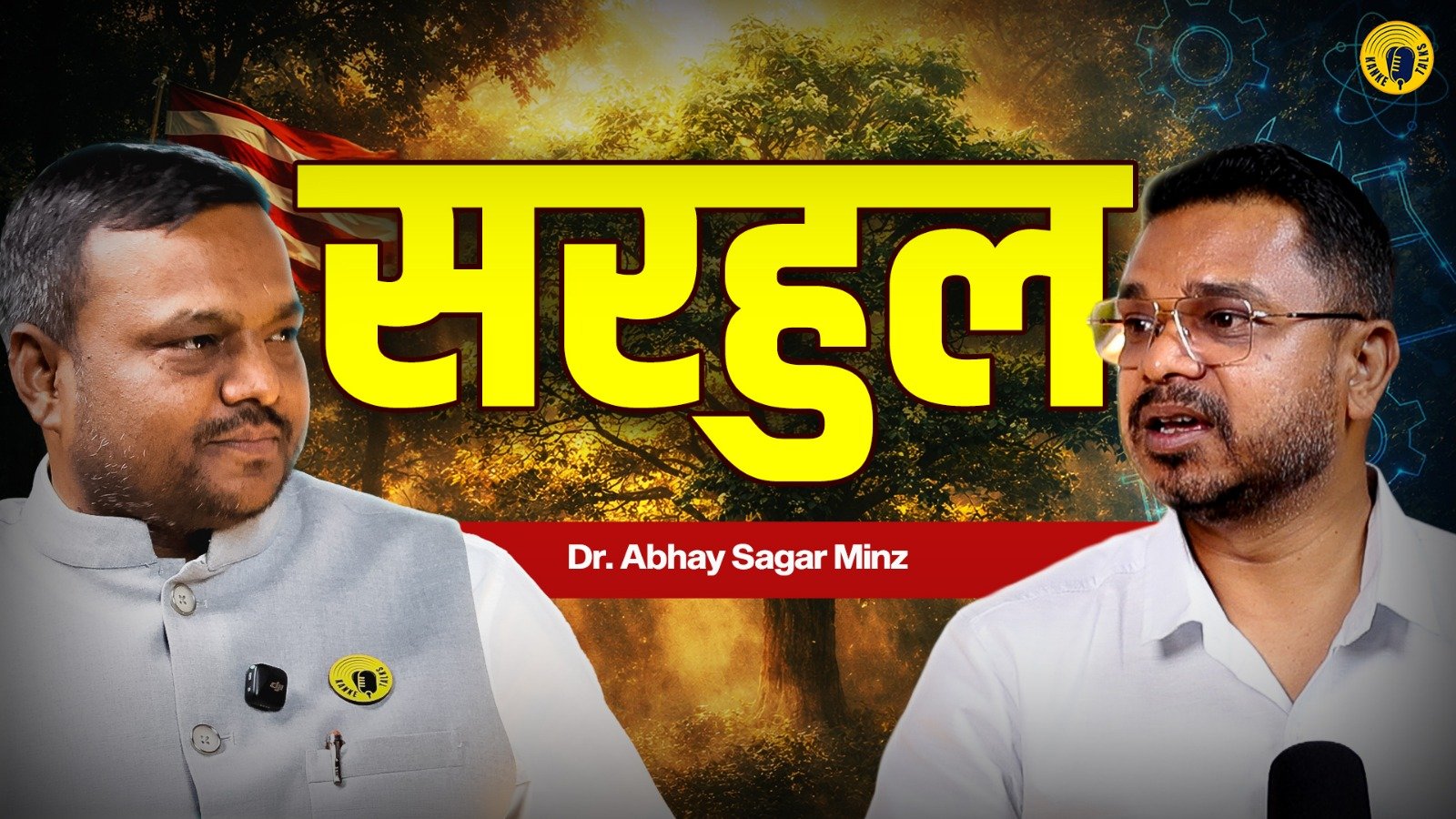
(A Conversation with Dr. Abhay Sagar Minz)
Introduction: Not Just a Festival… A Way of Life
Jharkhand is often called the land of minerals.
But those who truly understand this land know —
its real identity lies in its forests, its rivers, and its tribal wisdom.
And if there is one festival that captures this identity completely,
it is Sarhul.
But here’s the question:
👉 Is Sarhul just a festival?
Or is it something much deeper?
In a powerful conversation on KankeTalks, anthropologist Dr. Abhay Sagar Minz explains that Sarhul is not merely a celebration —
it is a complete philosophy of life.
Sarhul: Festival, Culture or Philosophy?
According to Dr. Minz, Sarhul is not limited to one definition.
It is:
A festival
- A cultural expression
- And most importantly, a life philosophy rooted in nature
This is because tribal life is deeply connected with belief, environment, and daily living — making Sarhul an integrated experience, not just an event.
The Science Behind Sarhul: Nature as a Calendar
Long before modern calendars existed,
tribal communities observed nature as their guide.
Dr. Minz explains:
- Falling leaves (पतझड़) symbolized an ending phase
- New shoots (नई कोपल) symbolized new life
- Blooming of flowers indicated the arrival of a new year
👉 This is how Sarhul marks the beginning of a new cycle of life.
This is not mythology ,
this is ecological observation turned into cultural practice.

Sarhul: The Marriage of Sun and Earth
One of the most fascinating interpretations of Sarhul is this:
👉 It represents the union of Sun (Surya) and Earth (Prithvi)
But why?
Because tribal communities observed that:
- Sunlight + Soil + Water = New Life
- Seeds germinate due to this natural interaction
So instead of explaining it scientifically,
they expressed it symbolically as a divine marriage.
This is how science became storytelling in tribal traditions.
Sarhul & Sustainability: The Original Conservation Model
One of the most powerful insights from the conversation:
👉 Sarhul is not just cultural… it is sustainable living in action.
1. No Hunting Before Sarhul
Why?
Because:
- It is the breeding season of animals
- Hunting is stopped to protect future generations
This is pure wildlife conservation logic.
2. No Plucking Fruits Before They Mature
- Fruits are not consumed before ripening
- This ensures natural growth cycle and balanced nutrition
👉 A perfect example of food sustainability + discipline.
3. Take Only What You Need
Tribal communities traditionally believed:
“Resources belong to the community, not individuals.”
- No hoarding
- No over-exploitation
- Equal distribution
👉 This is what modern economics calls sustainable resource management.
Indigenous Knowledge = Real Science?
Dr. Minz challenges a powerful assumption:
“Science is not only what is written in books.”
For example:
- Predicting rainfall using water levels in earthen pots
- Observing ants to predict weather changes
- Using plants medicinally without lab testing
👉 These are not “beliefs” —
they are empirical knowledge systems built over generations.
Sarna Sthal: Sacred Ecology
Why are Sarna (sacred groves) considered holy?
Because:
- They are protected ecological zones
- No encroachment, no pollution
- Preserve biodiversity and oxygen balance
👉 In modern terms, Sarna is a natural conservation zone created by culture.
Sarhul: Not Just Celebration, But Collective Therapy
Sarhul celebrations include:
- Dance
- Music
- Community gatherings
But Dr. Minz reveals something deeper:
👉 It acts as a psychological and physical healing system
- Music releases dopamine (pleasure hormone)
- Dance acts as full-body exercise
- Community bonding reduces stress
👉 Sarhul is also a mental health model hidden in culture.
Sarhul vs Modern Development
Dr. Minz raises a critical concern:
👉 Modern development has disconnected us from nature.
- Commercialization → Over-exploitation
- Technology → Lifestyle imbalance
- Market mindset → Loss of community values
Meanwhile, tribal society teaches:
👉 “Live and let live”
👉 “Take only what you need”
👉 “Nature is a relationship, not a resource”
Can Sarhul Solve Climate Change?
A bold but important question.
Dr. Minz says:
- We may have already crossed the “point of no return” in climate damage
- But Sarhul still offers a direction to improve future outcomes
👉 The message is simple:
“If nature survives, we survive.”
The Deeper Truth: Why This Conversation Matters
Sarhul is not just about Jharkhand.
It is about:
- Rethinking development
- Understanding indigenous knowledge
- Rebuilding our relationship with nature
And most importantly—
👉 It challenges us to ask:
Are we progressing… or losing something essential?
Conclusion: Nature is Not a Resource… It is a Relationship
Sarhul reminds us of a truth that modern society often भूल गया है:
“प्रकृति सिर्फ संसाधन नहीं… रिश्ता है।”
And perhaps this is the wisdom
the entire world needs today.
👉 Watch full podcast on KankeTalks YouTube Channel
(Dr. Abhay Sagar Minz on “Sarhul ka Asli Vigyan”)
Also Watch this


