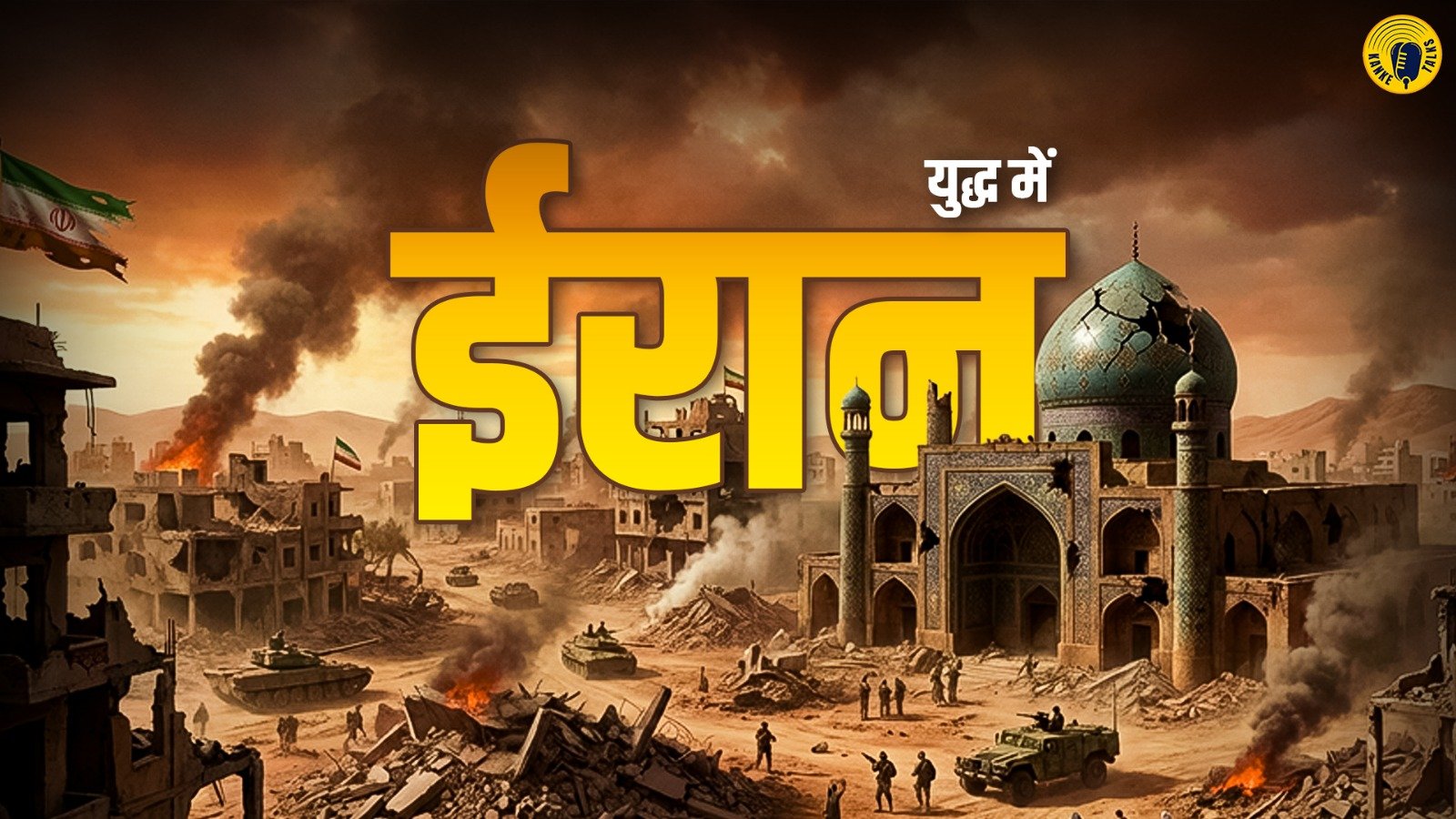
What We Learned from Our Deep Geopolitics Podcast on Iran
When people search for Iran vs Israel conflict or Iran nuclear program explained, they are usually looking for immediate answers.
But in our KankeTalks podcast with Prof. (Dr.) Ravi Dutt Bajpai, we realized something important:
Iran cannot be understood through breaking news alone.
To understand today’s Iran–America tensions, the JCPOA nuclear deal, or the IRGC’s role in the Middle East, you must first understand its civilizational roots and revolutionary transformation.
This blog captures the key insights from that conversation (Watch the full Iran analysis episode)
1. Iran Before the 1979 Revolution: A Civilizational Power
Long before the Islamic Republic of Iran, there was the Persian Empire — a major force in global history.
Understanding Iran’s ancient governance systems helps explain its modern statecraft. Iran sees itself not merely as a nation-state but as a historical civilization.
This civilizational memory influences:
- Its foreign policy decisions
- Its resistance to Western pressure
- Its regional ambitions in West Asia politics
Iran’s strategic posture today cannot be separated from its deep historical identity.
2. Iran Revolution 1979: Why It Changed the Middle East
The Iranian Revolution of 1979 was not just regime change — it was a geopolitical earthquake.
Before 1979:
- Iran was a close U.S. ally
- It maintained ties with Israel
- It was considered a Western pillar in the Middle East
After the revolution:
- The U.S. embassy hostage crisis reshaped Iran–America relations
- The Islamic Republic replaced the monarchy
- Anti-Israel rhetoric became state policy
This shift still defines the Iran vs America tensions we see today.
But here’s the deeper lesson:
Revolutions often replace rulers, not power structures.
Iran transitioned from monarchy to a system where the Supreme Leader holds ultimate authority — shaping military, judiciary, and foreign policy decisions.
3. Who Really Controls Iran? Understanding the Supreme Leader System
When people search Iran Supreme Leader explained, they are trying to understand power.
Iran has:
- An elected President
- An elected Parliament
- But an unelected Supreme Leader above both
Since 1989, Ali Khamenei has held this position.
The Supreme Leader:
- Oversees the armed forces
- Influences nuclear negotiations
- Controls state broadcasting
- Appoints key judicial figures
This system explains why electoral politics in Iran has limits.
4. IRGC Role in Middle East: The Real Power Center
The Islamic Revolutionary Guard Corps (IRGC) is central to Iran’s strategy.
When analysts discuss the IRGC role in Middle East conflict, they refer to its involvement in:
- Regional proxy networks
- Strategic deterrence against Israel
- Protection of the Islamic system
The IRGC is not only a military force. It has economic influence and plays a key role in shaping Iran’s regional presence.
Understanding this helps decode Iran vs Israel shadow tensions.
5. Iran Nuclear Program & JCPOA Nuclear Deal
Few topics generate more search traffic than Iran nuclear program latest update.
Iran insists its nuclear ambitions are peaceful.
Western nations fear weaponization.
The 2015 JCPOA nuclear deal aimed to limit uranium enrichment in exchange for sanctions relief. However, after the U.S. withdrawal in 2018, tensions escalated again.
Today, Iran nuclear negotiations remain central to global geopolitics.
Sanctions have deeply impacted Iran’s economy, yet the country continues to pursue strategic autonomy.
6. Iran Protest 2022 & Mahsa Amini Movement
When Mahsa Amini died in 2022 after being detained by morality police, protests erupted.
The “Woman, Life, Freedom” movement became one of the most significant protest waves in recent Iranian history.
Earlier, the 2009 Green Movement had already exposed political dissatisfaction.
These protests reveal:
- Youth unrest
- Gender rights demands
- Generational change
Iran’s internal transformation may ultimately be more powerful than external sanctions.
7. India Iran Relations & Strategic Interests
For Indian readers, Iran is not a distant issue.
India–Iran relations include:
- Energy cooperation
- The Chabahar Port project
- Regional trade connectivity
India’s West Asia strategy depends partly on stable relations with Iran.
Understanding Iran’s foreign policy helps decode India’s geopolitical balancing.
8. Is Iran Rising or Strategically Contained?
From a Middle East geopolitics analysis perspective, Iran presents a paradox.
Signs of Rise:
- Strong regional networks
- Military deterrence capability
- Civilizational confidence
Signs of Pressure:
- Economic sanctions
- Brain drain
- Diplomatic isolation in Western blocs
Iran is neither collapsing nor dominating uncontested. It is adapting.
Iran’s Future Will Be Decided Within
If you ask whether Iran will rise or fall, the honest answer is:
Its future will be shaped less by foreign adversaries and more by internal evolution.
Generational change, economic resilience, and institutional flexibility will determine the next chapter.
The Iran vs Israel conflict, Iran nuclear program debates, and Iran America tensions are visible layers.
But the deeper story is societal negotiation between authority and aspiration.
Why This Podcast Matters
This episode is not built on sensationalism.
It is built on historical context, structural analysis, and strategic clarity.
If you are:
- Preparing for UPSC or studying geopolitics
- Interested in West Asia politics
- Trying to understand global power shifts
- Or simply seeking balanced analysis
This podcast offers grounded insight.
At KankeTalks, we aim to simplify complex global issues without distorting them.
Because in today’s world, understanding geopolitics is no longer optional — it is essential.
Also Watch this